The Big F
Sam: Can I ask you something kind of dumb?
Riya: Always.
Sam: What actually is fascism. Like, the real definition. Not the twitter one.
Riya: There isn't a single way to understand it. But there's a pretty good list.
Sam: What kind of list? From who?
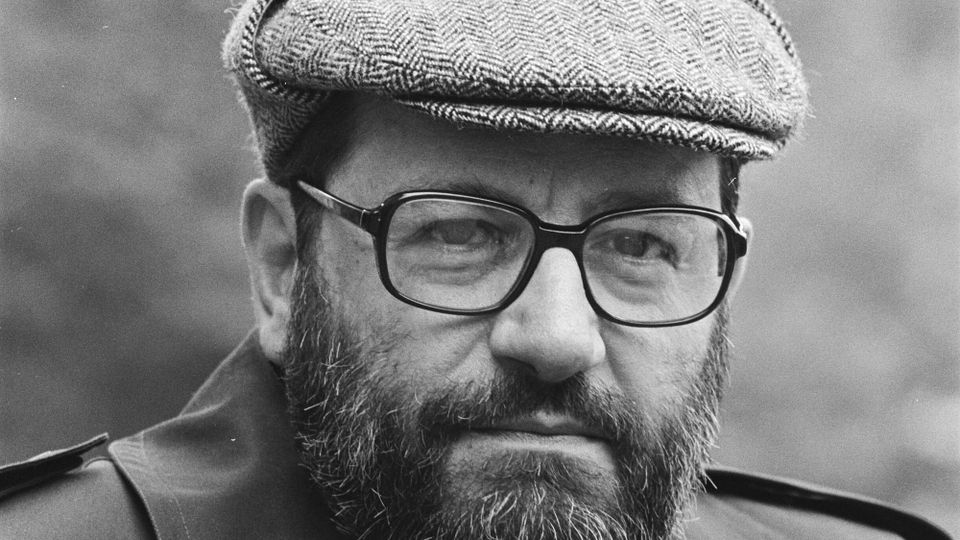
Riya: Umberto Eco. 1995. Grew up under Mussolini, spent his life trying to describe what he'd lived through. He called it Ur-Fascism — "ur" meaning the original, the underlying shape. Fourteen features. You don't need all of them. A few overlapping is enough to qualify as the big F.
Sam: Okay. Give me one.
Riya: The enemy is both weak and strong.
Sam: What the hell does that mean?
Riya: The people you're told to fear are simultaneously pathetic and a mortal threat. Vermin you could crush, and an existential danger requiring emergency powers.
Sam: ...?
Riya: Both can't be true. But fascism needs both. The weakness justifies the contempt. The strength justifies the violence.
Sam: Oh. Like immigrants.
Riya: Classic fascist scapegoat. "They're eating the dogs. They're eating the cats." And in the same breath, they're taking your job and ruining your neighborhood.
Sam: Living in squalor. Also masterminding cartels that are trying to take over the country.
Riya: Desperate enough to swim a river. Organized enough to be an invasion.
Sam: That one's hard to argue with. What else.
Riya: Cult of action. The idea that thinking is a kind of cowardice. That real men act, and analysis is for losers who won't pull a trigger.
Sam: Oh, hmm. Like woke universities, journalists, scientists...
Riya: Yeah, those snowflakes. Anyone who slows things down by asking for a coherent explanation.
Sam: And any disagreement is treason, I'm guessing.
Riya: That's number five.
Sam: Speaking of treason — isn't some of this just patriotism? Pride in cultural identity?
Riya: Eco got to that, too. Patriotism is loving where you're from. The feature he named is "the mythologized past" — the country was great, it has fallen, only we can restore it. The greatness is always behind us. The restoration always requires someone to blame.
Sam: Make it great again.
Riya: That's the phrase, yes.
Sam: I keep waiting for one of these to not fit.
Riya: Mm.
Sam: But the people who use the word fascism always seem so hysterical. On the news. In the comment section. Like they're trying way too hard to sound edgy and smart.
Riya: Eco wrote about that too. He said the work of recognizing fascism is constant and unglamorous. Pointing at every new instance, every day. He had a name for the work.
Sam: Which was.
Riya: Anti-fascism. Which is now a domestic terror designation.
Sam: So we have language for the pattern in history. Clearly understood, taught in schools without controversy. And when it shows up in front of us we get squeamish about using the same words.
Riya: Yeah.
Sam: Why?
Further reading: Umberto Eco, "Ur-Fascism," The New York Review of Books, June 22, 1995. https://www.nybooks.com/articles/1995/06/22/ur-fascism/
© 2026 All rights reserved. Please do not reproduce, repost, or use without permission.