
Cool, Clear, Water
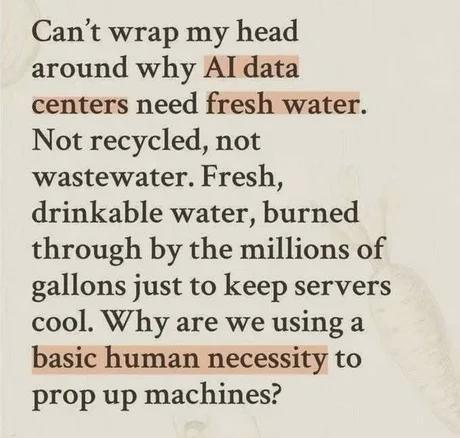
Jordan: Did you see that thing going around — about data centers using drinking water to cool servers? Why does it have to be fresh. Like, why not recycled?
Casey: So there's a real answer to that.
Jordan: Okay, I'm all ears.
Casey: Servers generate a ton of heat. To deal with it, most big data centers run a coolant through pipes around the equipment. That coolant gets hot, and then you need something to cool the coolant.
Jordan: And that something is water.
Casey: Fresh water, through a heat exchanger. The water pulls the heat out of the coolant, gets warm, and then gets discharged or evaporates. Does that track?
Jordan: So the water never actually touches the servers. It's cooling the thing that cools the servers.
Casey: Exactly. And the reason it needs to be clean is that minerals and bacteria in the water corrode the heat exchanger. Dirty water eats the pipes faster than they want to deal with.
Jordan: So they're protecting the equipment. Not some weird server thing.
Casey: Pure economics. Cheaper to use municipal water than to maintain corroded infrastructure.
Jordan: Can't they treat recycled water? Clean it enough to use?
Casey: They can. That's what a closed-loop system does — instead of pulling fresh water in and discharging it out, you treat and recirculate the same water. Like a car radiator. Same water going around and around. Does that make sense?
Jordan: Yeah. And you can control what's in it, so it doesn't eat the pipes.
Casey: Exactly. Some places already use them.
Jordan: Why isn't everyone.
Casey: More infrastructure upfront. More electricity to run the pumps.
Jordan: Oooph. Okay, so what happens with the water in the systems that aren't closed-loop.
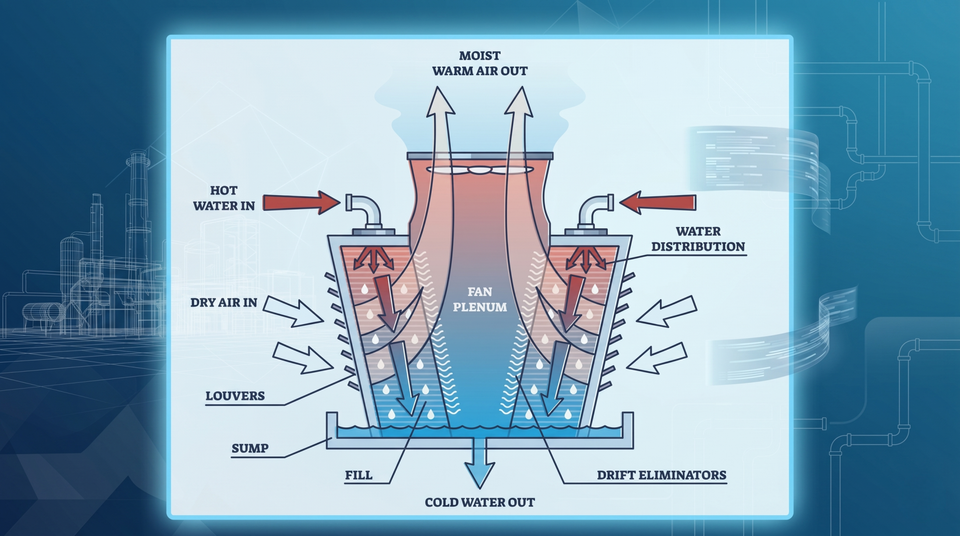
Casey: Two things. A lot of it evaporates out of cooling towers — those are the big rectangular concrete structures you see near industrial sites, sometimes at power plants. Usually wider than they are tall, with what looks like steam or fog drifting off the top.
Jordan: I think I've seen those driving on the highway.
Casey: That's evaporative cooling. Water absorbs the heat, vents as vapor. Gone — back into the atmosphere, downwind somewhere.
Jordan: And the rest?
Casey: Discharged. Into the ground, a pond, or the municipal sewage system.
Jordan: So the water isn't destroyed?
Casey: Nope, not destroyed. More... redistributed.
Jordan: Like, in a bad way?
Casey: Depends where it ends up. If you're pulling from an aquifer and discharging to a sewage treatment plant, you've moved water from underground to the surface wastewater system. The aquifer doesn't automatically refill.
Jordan: And if the treatment plant wasn't built for that volume —
Casey: Then it's the municipality's problem.
Jordan: So even when they're returning the water, they might be returning it somewhere it doesn't help.
Casey: At a scale the local system wasn't designed for. One large data center can use as much water as a city of fifty thousand people.
Jordan: Every day?
Casey: 24/7.
Jordan: So the water problem is real.
Casey: The water problem is real.
Jordan: But.
Casey: I didn't say but.
Jordan: You have a but face.
Casey: The water is also — kind of the smaller problem.
Jordan: What's the bigger one.
Casey: The electricity.
Jordan: How much are we talking.
Casey: A typical hyperscale data center uses as much power as a hundred thousand homes.
Jordan: Okay.
Casey: That's the small ones.
Jordan: What are the big ones.
Casey: Meta's building one in Louisiana. It'll need more power than the entire city of New Orleans. Three times over.
Jordan: ...
Casey: And somebody has to build the infrastructure to deliver that electricity.
Jordan: Please tell me it's the company building the facility.
Casey: I wish I could tell you that. Usually it's the utility. Which passes the cost to ratepayers.
Jordan: Meaning us.
Casey: One study looked at seven mid-Atlantic states in 2024. Found that utilities had charged customers four-point-three billion dollars in data center connection costs. That year alone.
Jordan: How much of that did we vote on.
Casey: None of it. That's just how utility rate-setting works. Big customer needs a line, the line gets built, everyone's bill goes up a little.
Jordan: And in exchange we get — what.
Casey: Tax revenue, sometimes. Depends on the deal. Construction jobs during the build.
Jordan: After the build?
Casey: One estimate put the total permanent US data center workforce at around twenty-three thousand people. Nationally.
Jordan: That's like — Athens, Ohio.
Casey: You went to OU, didn't you?
Jordan: Class of 2012, go bobcats.
Casey: Twenty-three thousand data center jobs, spread across the entire country.
Jordan: And we're paying to wire the national grid up for them.
Casey: There are places where the tax math works better. One county in Virginia collects so much in data center property taxes it nearly covers their entire operating budget.
Jordan: That sounds like it's working.
Casey: Their residents' electric bills are still going up. The tax revenue and the grid costs run through different pockets.
Jordan: Who decides any of this gets to keep going the way it's going.
Casey: That's the thing — people are pushing back. Hard. Over sixty billion dollars in projects were delayed or killed between mid-2024 and early 2025 just from organized local opposition.
Jordan: What kind of people.
Casey: That's the part I find interesting. It's not really a left-right thing. Rural conservatives don't want their aquifers drained and their farmland rezoned. Progressive city councils don't want grid costs landing on low-income households. Farmers, environmentalists, county commissioners. Some pretty unlikely combinations.
Jordan: Huh.
Casey: Some have won. Projects canceled, permits denied, moratoriums passed.
Jordan: Some haven't.
Casey: Some haven't. The companies have a lot of money and a lot of lawyers, and the federal permitting rules just got looser.
Jordan: So it's not hopeless.
Casey: No. But the people who want to slow this down are fighting municipality by municipality, and the buildout is happening everywhere at once.
Jordan: Like playing whack-a-mole with a data center.
Casey: Except the mole is the size of New Orleans. Three times over.
Further Reading
- Consumer Reports, "AI Data Centers: Big Tech's Impact on Electric Bills, Water, and More" (March 2026)
- Union of Concerned Scientists, "Data Centers Are Already Increasing Your Energy Bills" (October 2025)
- Environmental and Energy Study Institute, "Data Centers and Water Consumption"
- Lincoln Institute of Land Policy, "Data Drain: The Land and Water Impacts of the AI Boom" (February 2026)
© 2026 All rights reserved. Please do not reproduce, repost, or use without permission.